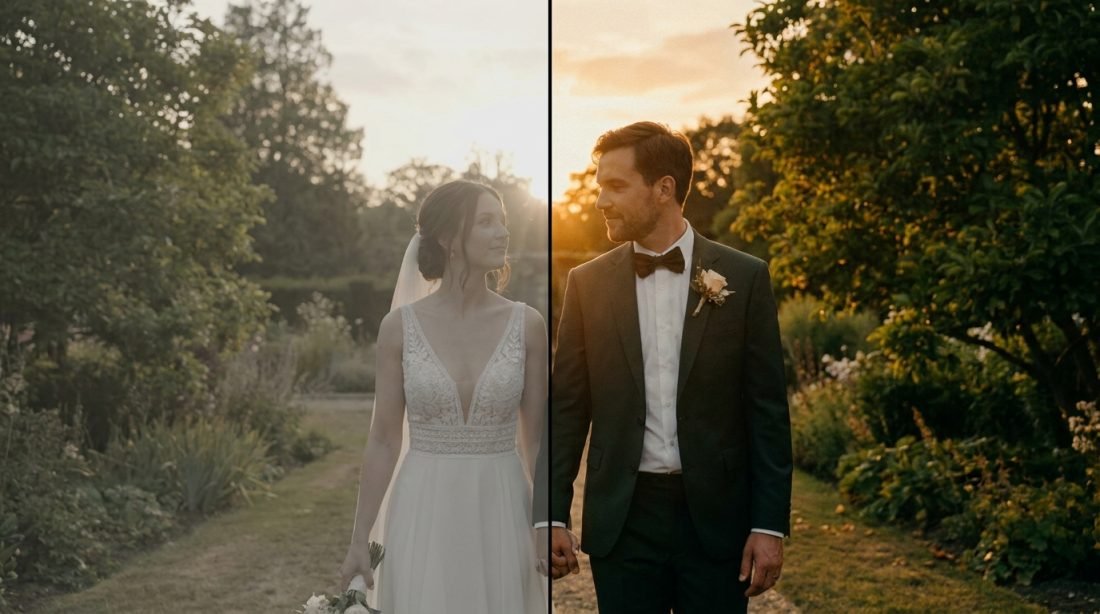
These two terms get used interchangeably, but they are different steps that solve different problems — and skipping one for the other is a common way wedding footage ends up looking flat or inconsistent.
Color correction: fixing what the camera got wrong
Color correction is the technical fix. It balances exposure, adjusts white balance so skin tones look natural instead of orange or blue, and matches shots from different cameras or lighting conditions so a ceremony shot in daylight cuts smoothly into a reception shot under warm indoor lights. It is a necessary baseline step, not a creative one — the goal is footage that looks accurate, not stylized.
Color grading: building a look, on purpose
Color grading happens after correction and is where the creative decisions live. This is where an editor pushes warm tones into golden-hour footage, deepens shadows for a moody ceremony sequence, or gives an entire film a consistent cinematic palette that ties every scene together. Grading is what makes two technically correct wedding films look completely different in mood — one warm and romantic, another cool and editorial.
Why the order matters
Grading before correcting is like painting over a crooked wall — the creative work sits on top of an unfixed technical problem, and it usually shows. Footage needs to be balanced and consistent first. Only then does a stylized grade hold up across the whole film instead of drifting between shots.
What to look for in your own footage
If skin tones look natural and shots cut together smoothly without a jarring color shift, correction has been done properly. If the film also has a consistent mood — a deliberate warmth, a specific palette — that carries from the first frame to the last, that is the grade. A film missing the second step can still look “fine,” but it will not have a distinct visual identity.
Frequently asked questions
Do all wedding films need color grading, or is correction enough?
Correction alone gives you accurate, watchable footage. Grading is what gives a film a deliberate cinematic identity — it is optional in the sense that a film can exist without it, but most cinematic-style wedding films include it.
Can color grading fix footage with bad exposure or white balance?
Grading can compensate for minor issues, but it works best on footage that has already been properly corrected. Severely under- or over-exposed footage has real limits to what any amount of grading can recover.
How long does color grading typically take?
It depends on footage volume and how many distinct looks a film needs, but it is typically folded into the overall editing timeline rather than billed as a separate wait.